
2026 Out: Copyright
she's over

Dear On Looker,
Is it too late for a 2026 in/out? Sue me!
In September 2024, I was sitting in a room full of lawyers, technologists, and other barnacles of artistic labour. The Copyright & Technology conference happens every year in New York and as an anthropologist working with artists, it always feels like stepping into the Upside-Down. In this mirror dimension, copyright lawyers chart the nature of the artwork through questions of attribution, thresholds of human input and substantial similarity. The questions felt familiar yet warped to another logic. I had to learn how to see an artwork like a lawyer.
That morning, I had collected my lanyard that simply stated my name and university and left no clue to my a-legal purpose here. I was entering a space under cover and that clandestine feeling didn’t sit well with my anthropology training. But as the day went on and I listened to the speakers, I realised it wasn’t the anthropologist in me who was under cover, but the artist.
Copyright law had been an implicit presence in my daily dealings as an illustrator for many years. It regulated the contracts I signed with my clients and, I assumed, protected me from plagiarism. My understanding of the law extended just far enough to explain to my clients why paying me for my labour didn’t mean they owned my work.
This was a sort of operational knowledge, the kind useful for everyday life but necessarily inaccurate, like a common-sense understanding of gravity. Walking while thinking of gravity as something that keeps me grounded is fine. But when I walk while thinking of orbital motion, time dilation and gravitational waves, I feel dizzy.
Moving from France to North America a decade ago, I had already adapted my romantic understanding of copyright to the Anglo-American context, where it is less about authorship than ownership. Here, copyright law protects owners, and an author just happened to be the first owner of a work. That day at the conference, I soon realised that when lawyers talked about “rights holders,” they weren’t referring to artists, but to corporations.
The 2024 keynote speaker was Tom Rubin, the Chief Intellectual Property Officer at Open AI. Despite lawyers’ usual opening statements that their views were their own and not those of their companies, most of them spoke as their companies, occasionally slipping from “I” to “we”. These companies (movie studios, record labels, streaming platforms, etc.) were the rights holders copyright lawyers were concerned with. This was a reminder that copyright was never made for artists in the first place.1
In the afternoon, one of the lawyers explained that ultimately, copyright law was designed to create more content for consumers. The SAG-AFTRA strikes were only a year before and I wondered how that statement would have fared on a picket line. Skipping over the other goal of copyright law (that of creating incentives for artists to create) she said the quiet part out loud:
“[W]e should take a step back and consider that monetization isn’t for everyone,” she started, “There are many different reasons people create, they can create to promote knowledge, they can create for the sake of it, they can create for others to build on.”
In other words, why bother protecting artists when they will keep on creating anyway?
We had gotten to a place where art and commerce had been so forcefully and irremediably separated that it was now normal to say that a whole class of workers needed not to be paid for their labour (Recall Mira Murati’s infamous statement that “some creative jobs […] shouldn’t have been there in the first place”).
I felt dizzy.
How did we get here? How had copyright, which I thought was in my corner, become the justification for artists’ exploitation? To understand this, I had to understand how copyright came about, and how its origin story erased artists entirely to fetishize “The Work.”
The Fetish of Copyright
Artists have been absent from copyright law since the beginning.
In Great Britain, until the end of the seventeenth century, the publication of books was monopolized by the Stationers’ Company, a guild of printers and publishers based in London. Writers (they were not called authors yet) sold their work to a member of the Company much like you’d sell any other good, in perpetuity. The buyer would then own the work and could publish and print it forever. The monopoly started to crumble when other bourgeois figures wanted to take part in the profitable business of capitalising on creative labour and the Crown decided that it would be wise not to have such a private entity regulating the whole of knowledge production and circulation. In 1710, the Statute of Anne, typically known as the first copyright law, passed and with it a first right of ownership was granted to writers over their work for an initial period of 14 years (this is a much abridged version of the real story).
It was one thing to decree that writers would own their work and that literary works should constitute a different kind of commodity, it was another to establish what exactly that “work” was and how it was to be exchanged. What was protected by the Statute? Was it the physical book? Or the ideas in the book? It took another century and many litigation before the structure and object of the law shaped up in anything that looks familiar. Lawyers and intellectuals engaged in this debate were not just defining the object of copyright, they were making it up.
One of them, William Blackstone, in the seminal Tonson v. Collins (1762) case, framed the object of copyright this way:
First there is the book, the physical object produced by a printer. This would be exchanged as a regular commodity, a simple vessel.
Second, there are the ideas conveyed by the book. These should remain free for everyone to use and build on.
Finally, there is what he called the composition, or later the “style and sentiment” of the text. This is the way the ideas are strung together, the way words follow each other on the page.
This third part, Blackstone argued, was the object of copyright. The medium was a vessel, the ideas were public, but the ways they came together in a unique expression was what copyright should protect and only that. This is where the legal distinction between idea and expression comes from, and it still underpins copyright to this day. The ideas in a work are public, only their particular expression fixated in a medium are protectable.
Since then, every claim made under copyright law has had to prove that the copying related to expressions and not ideas.
Consider the following image:
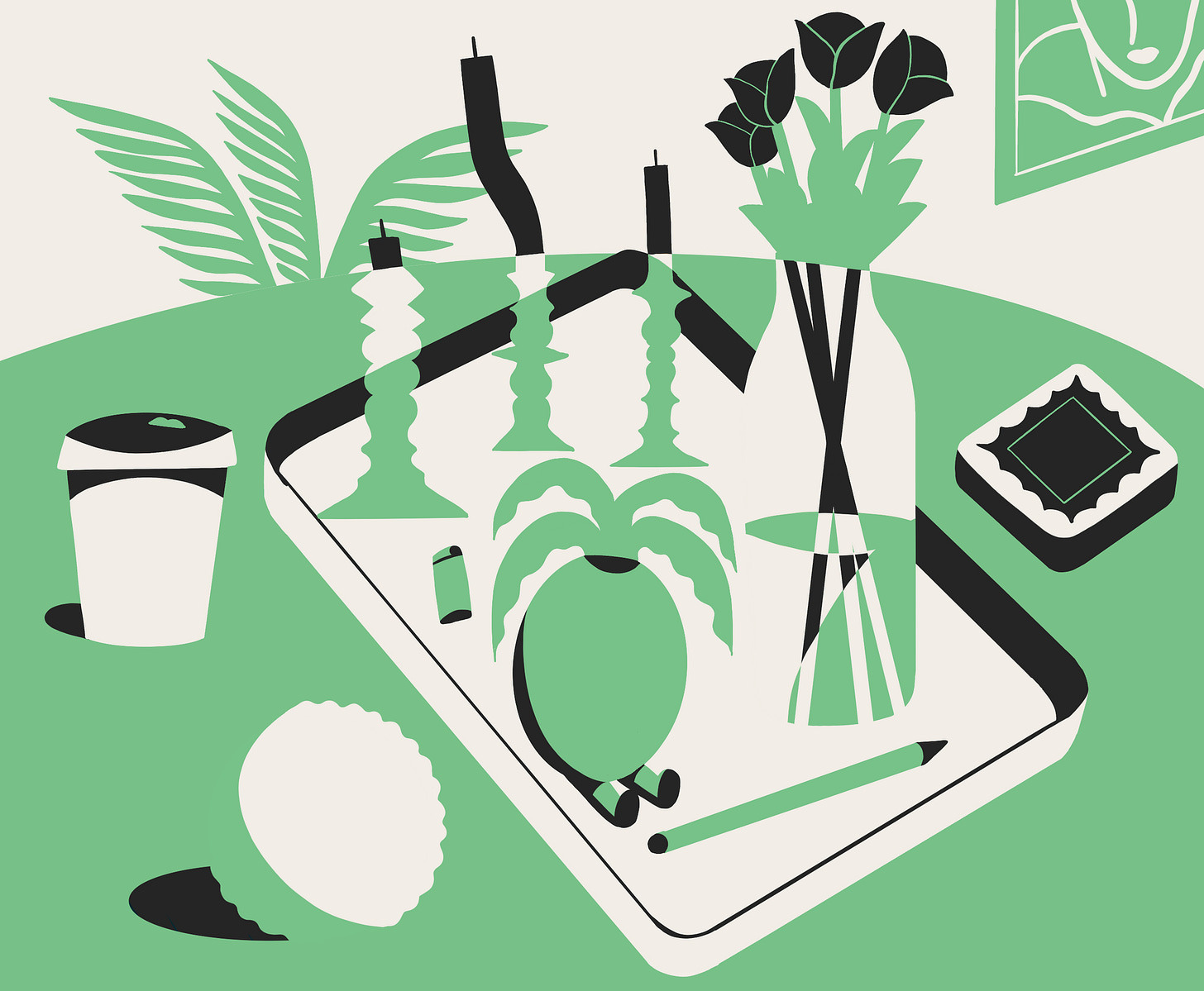
You may buy a print of this image and own the physical object. This is a tangible good that doesn’t grant you the right to copy it. You just bought the vessel.
You may decide that you too want to draw a still life of candles and a to-go cup and a tray and a massage ball and a lighter and so on. This is an idea copyright doesn’t protect.
You may decide to draw a still life of candles and a to-go cup and a tray and a massage ball and a lighter and so on, in a cream, black and green tones, with colours changing at the intersection of certain elements and a crooked perspective. Now we’re getting closer to an expression, and with it to copyright infringement.
The goal of copyright law, as that lawyer had said, has always been to maximize the creation of these expressions. In legal parlance, copyright law is here to “incentivise” the creation of such expressions, and to do so it grants some limited rights to their makers.
Some legal scholars have been critical of this fetish of the work, because in practice, it rarely benefits artists. Xiyin Tang recently wrote an article that shows how Intellectual Property laws are essentially labour policies that regulate the flow of commodities and the exchange of labour between creators and large IP firms (the ones for whom the lawyers at the C&T conference worked for). In this system, she wrote:
Authors and inventors are only relevant because they have been, up until very recently, the only entities capable of creating at all.
In other words, copyright law, with its focus on maximising creative outputs, cares little about how the sausage gets made, as long as it gets made. “Creators” were only incidental to this goal. But she continues:
AI turns the incentives theory on its head, by making the creation of works near-instantaneous and near-infinite while simultaneously threatening to render the creative laborer obsolete.
The focus of copyright law has always been the maximisation of creative expressions, not the protection of creative workers. This is why AI companies have a leg up on artists; because “expression,” the fetish of copyright, is just another word for output.
What was a copy
Copyright law was a product of its time and of the reproduction technologies available at that time. The idea/expression division has endured until now because reproduction technologies haven’t changed dramatically in the past few hundred years. This sounds like a bold statement. But really, in the kind of copy they produce, the printing press and the photocopier copy the same thing, expressions. You input a text, and the output is the same text, in the same words in the same order. What goes in comes out, simply multiplied and, crucially for copyright, unchanged.2
But this is not the kind of copying generative AI models like LLMs and diffusion models perform. People who use these models don’t use them to copy in a traditional sense, and when they try, the results are… well.
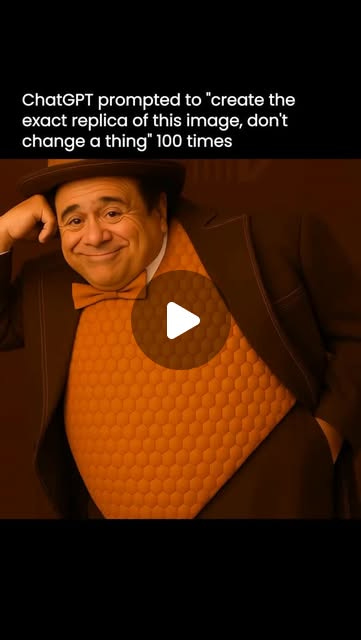
These models don’t copy the way photocopiers do, yet it doesn’t mean they don’t copy. It simply means that our conception of what a copy is, because it was forged with the historical and technological metaphors available in eighteenth century England, hardly captures what a copy can be under this new paradigm.
Returning to the previous image, what if now you decided to draw a landscape with a house by a waterfall, also in a cream, black and green tones, with colours changing at the intersection of certain elements and a crooked perspective? Or better yet, you used a diffusion model trained on many illustrations I made using these “rules” and were able to extract, to a certain extent, their relations and apply them to other subjects.
You wouldn’t be copying the expression of the image like a photocopier would. You wouldn’t be copying the idea of the image either, which anyway wouldn’t be protected. But certainly, something else would be copied. Something that is definitely more material and perceivable than an idea, yet not quite as concrete and fixed in a single work as an expression. That something is style, and because it stands on the edge of the idea/expression divide, it has offered a whole new resource for AI companies to exploit.
A notorious example is that of Greg Rutkowski, whose name has been used lavishly in users’ prompts to invoke his style into an image. Yet Rutkowski and the many other illustrators involved in lawsuits against AI companies have been struggling to make a clear case for why this type of use constitutes copyright infringement. How to adjudicate a new activity with a law that was created when such activity was unthinkable? This is the challenge these lawsuits are currently facing.
But generative AI doesn’t merely escape the traditional division between idea and expression, it directly profits from the gap left in between as a source of capital. Because style was evacuated as an unprotectable “idea” while still being central to the creative economy, AI companies were able to capitalise on it, free of charge. These aesthetic rules, which are neither idea nor expression, yet foundational to both, were left in the “public domain.”
Yet public domain doesn’t mean universal and accessible, let alone free from profit. The public domain as a free source of knowledge and creativity by which everyone can be inspired is a myth. Consider for example, the generic drug market, expected to reach 143.22 Billion by 2035. Drug formulations that become public domain after their patent ends are technically freely available for anyone, but in reality it takes enormous resources to actually operationalise their availability. For those who can afford to mine it, the public domain is a trove of free capital, and AI companies have just developed a new drill.
For those who can afford to mine it, the public domain is a trove of free capital, and AI companies have just developed a new drill.
Copyright law, its conception of what is protected or not and the public domain it outlines in its margins, are unfortunately not the best partners for artists fighting against generative machine learning models; not in the US at least. And historically, as imperfect and counterintuitive the idea/expression distinction has become over the years, no attempt has been made to rethink its contemporary validity.3
So what is the alternative? It’s not glamorous, it’s not romantic, it is in fact brutally neoliberal. And yet, it has held, in some corners, the promise of a salutary strategy for (commercial) artists. Have you heard of trademark?
Being a Business > Being a Person
To have rights in the United States, it is more strategic to be a business than to be a person. This is something the artists involved in Andersen v. Stability AI Ltd. have understood. The lawsuit, in its original complaint, included copyright infringement, DMCA violation and Rights of Publicity claims.
Rights of Publicity prevent the use of someone’s name or likeness for commercial purposes. These rights would protect an actor from having their voice or face “cloned” with generative AI, as it happened with Arijit Signh, a Bollywood playback singer who recently won his battle against Codible Ventures.
The artists in Andersen v. Stability AI Ltd. initially argued that AI companies had used their names, artistic identities and styles to promote their products:
215. Plaintiffs’ names and artistic identities are not limited to a specific copyrighted image or work developed by Plaintiffs. Rather, they extend to Plaintiffs’ entire corpus of work and allow consumers and the public to identify work “in the style of” Plaintiffs. Thus, Defendants did not only misappropriate work fixed in a tangible medium of expression, but also misappropriated Plaintiffs’ names and artistic identities.
As an anthropologist working with illustrators, this made sense to me. My interlocutors routinely refer to people’s identities via their styles and often know people’s styles while not knowing their names or their face. There is a sort of substitutability between these things because they are all constitutive of artists’ identities. This being said, the law cares little about anthropologists’ insights (and conversely, I’m not qualified to nor interested in making any legal argument), and the judge dismissed the claims of rights of publicity because the plaintiffs failed to prove that their names had specifically been used for the promotion of the AI products. That’s when things took a very American turn.
In their first amended complaint, the plaintiffs turned the personality right claims into trademark ones, by claiming the following:
319.The Midjourney Named Plaintiffs each sell original art, art reproductions, and art products, all of which feature respective protectable and distinctive trade dress. This trade dress consists of a set of recurring visual elements and artistic techniques, the particular combination of which are distinctive to each of the Midjourney Named Plaintiffs, associated with them and their work, and desirable to customers.
Personality rights and trademark formulations allow illustrators to do something copyright never let them: recognising the importance of style in creative work. For personality rights, style is a sign of personhood, along with a name and a face. For trademark it’s a “trade dress,” this ill defined collection of markers of a brand which gets tied to it through repeated use and exchange (for example, the contours of the Coca-Cola bottle). Trademark doesn’t restrict what the object of the protection can be. A trade dress can be a single thing like it can be a collection of different elements.
But a trade dress is also subject to consumer’s association between its elements and a product. Unlike copyright, it is not inherent to the act of production, but comes with the repeating act of consumption. This is why illustrators are some of the only artists able to leverage trademark claims. Their work, and their style, is routinely sold and bought, an exchange making it legible to trademark law, something fine artists cannot do. Becoming a business might enable them to make a claim which being a creator under copyright, or being a person under Rights of Publicity didn’t.
What a plot twist; the rejection of illustration and other “commercial arts” from the hall of fame of Art may be its lifeline. If the romantic ideal that shaped copyright failed to protect artists’ styles from AI companies, the squalor of being a commercial artist actually might. This is a brilliant move.
But the irony of the situation is not lost on me.
The fight between artists and AI companies is a well rehearsed performance of our favourite tragedies. Humanity fights for its exceptionality against a range of non-human demons, aliens, or machines. Artists, after all, serve as a model for our post-Enlightenment self, and what is more Other than a corporation that makes machines? The idea of a battle between “artists” and “AI” can only be an allegory. Both terms are floating signifiers in which our fantasies and fears are projected. We hope “artists” will redeem our capitalist faults by creating no matter what, proving that there is and will remain a life beyond our greed. And we accuse “AI” of theft, when the system in which we have lived for centuries has ensured we could never own anything to begin with.
But today, in the US, artists who wish to (or rather who must) fight for the humanness of their art might have better chances doing so cloaked as businesses. The artists in Andersen v. Stability AI Ltd. went from making their case as persons with identities that had been stolen by businesses to becoming businesses with brands fighting against unfair competition. I completely sympathise with that strategy and the law has its own rules that one must follow to even be legible under its eye. And I don’t want to romanticise the work of making art, if only because doing so trivialises all the other forms of work outside of that romantic garden.4 Becoming a business to claim one’s personhood might be the most 2026 thing ever, but it tastes bittersweet, doesn’t it?
What does victory look like when its cost is the very thing you’re fighting for?
I wonder, against the scale of individual victories, what we might lose at a systemic level. Copyright was never meant to protect artists but to make more stuff available. It never really incentivised artists to create but actively made one of their most important source of revenue in market economies, their style, freely available to corporations. AI companies designed technologies able to farm that “available” resource of human creativity, much like settlers claim ownership of stolen land. Trump, in the unveiling of his AI Action Plan was parroting tech companies lobbying points, stressing the importance to deregulate IP laws and the impossibility of paying creators because “China’s not doing it.”
Rebecca Blake, a graphic designer and organiser once told me that copyright was bipartisan because conservatives thought of it as a property right and liberals as a labour right. Contemplating the historical development and contemporary pressures on copyright, I wonder if this is still the case. But now that artists, to reclaim what was stolen, are required to become companies, turn their identity into a brand, their style into a trade dress, I wonder. Is this still about property, or labour, or humanity? What does victory look like when its cost is the very thing you’re fighting for?
In many ways, this essay is my way of processing the loss of my copyright innocence (this sounds biblical) while enlisting you as my support group. I write this as an invitation to think critically about the systems that we might take for granted like IP laws, at a time when they are being redefined without artists. I’m still hopeful but for the time being, for 2026, I am letting go of my hope for copyright to help artists against the lobbying of AI companies. I halfheartedly glance at trademark, with a sort of morbid curiosity, for solace.
What I just outlined here is only what happens in courts, and while important, this is by no means the end all be all of “the fight against generative AI.” Artists, like any workers, have always dealt with things from the ground up instead of waiting for top down benefactors. There are many ways of resisting, destroying, poisoning, “AI” which do not take place in courts or even under the purview of the law (wink wink).
In 2026, copyright might be out; but resisting is still, forever, in.
Further reading
Johns, Adrian. Piracy: The intellectual property wars from Gutenberg to Gates. University of Chicago Press, 2019.
Tang, Xiyin. "Intellectual Property as Labor Policy." New York University Law Review, Forthcoming (2024).
Woodmansee, Martha. "The genius and the copyright: Economic and legal conditions of the emergence of the'author'." Eighteenth-century studies 17, no. 4 (1984): 425-448.
Cohen, Julie E. "Creativity and culture in copyright theory." UC davis L. rev. 40 (2006): 1151.
I feel the need to add a disclaimer here, that I’m not a legal scholar and none of this argument is meant to work within the logic of the law. I’m an anthropologist and an illustrator, and I’m interested in Intellectual Property law as a cultural system and an infrastructure to the actual lived experience of making a living from making art.
This is obviously an oversimplification, but this is from the perspective of Intellectual Property law.
The US Copyright Office, which in an notorious report has sided with copyright holders (and in this case meaning artists) against AI companies, has still reiterated that the idea/expression dichotomy is still enough to work with.
In fact, much of my work here has been to advocate for recognizing the labour rights of “creatives.”
I can't believe no one told me about the COPYRIGHT CONFERENCE!!!!